Why Set Up a Charitable Remainder Trust? Simple Benefits for Donors and Causes
 Dec, 26 2025
CRT Calculator: Tax Savings & Income Estimate
Calculate Your Charitable Remainder Trust Benefits
See how much you could save on taxes and receive in income while supporting your favorite charity.
Most people don’t think about what happens to their money after they’re gone. But if you’ve built up savings, property, or investments-and you care about supporting a cause you believe in-a charitable remainder trust might be one of the smartest moves you’ll ever make. It’s not just about giving. It’s about giving smarter.
What exactly is a charitable remainder trust?
A charitable remainder trust (CRT) is a legal tool that lets you donate assets-like cash, stocks, or real estate-to a charity, while still getting income for yourself or someone else during your lifetime. After you or your beneficiaries pass away, the remaining money in the trust goes to the charity you chose. It’s a win-win: you get income now, tax breaks now, and your favorite nonprofit gets a big gift later.Think of it like this: you give a $500,000 portfolio of stocks to a CRT. The trust sells those stocks without paying capital gains tax. Then it uses the money to pay you 5% a year-$25,000-for life. When you die, the leftover balance-maybe $300,000 or more-goes to your chosen charity. You didn’t lose income. You didn’t pay taxes on the gain. And the charity got a major gift you couldn’t have given any other way.
You get income for life
One of the biggest reasons people set up a CRT is because it turns illiquid assets into steady income. If you own a family home you no longer live in, or shares in a business you sold but still hold, those assets sit idle. Selling them outright means paying big capital gains taxes. A CRT solves that.You can choose how much income you get. Most CRTs pay between 5% and 10% of the trust’s value each year. That payout is fixed or can adjust based on the trust’s performance. Either way, you get regular checks for as long as you live-even if the trust’s value drops. Your income is protected. Your charity still gets the remainder.
You get a big tax break right away
When you put assets into a CRT, you get an immediate income tax deduction. The amount depends on the value of the assets, the payout rate, your age, and current interest rates. For example, if you donate $1 million in appreciated stock to a CRT, you might get a tax deduction of $400,000 to $600,000 in the year you set it up.This deduction can lower your tax bill significantly. If you’re in a high tax bracket-say, 37%-a $500,000 deduction could save you close to $185,000 in federal taxes. That’s cash you can use to pay bills, travel, or invest elsewhere. And because the trust sells the assets without paying capital gains tax, you avoid paying 20% or more on the profit you’ve made over the years.
You avoid capital gains tax on appreciated assets
Let’s say you bought a piece of land in 1995 for $100,000. Today it’s worth $800,000. If you sell it yourself, you’ll owe capital gains tax on $700,000. At 20%, that’s $140,000 gone before you even see the rest. If you donate it to a CRT, the trust sells it tax-free. You get income from the proceeds, and the charity gets the leftover. No capital gains tax. No loss. Just smarter giving.This is especially powerful for people who own real estate, private company shares, or collectibles like art or rare coins. These assets often have huge unrealized gains. A CRT lets you unlock that value without paying the penalty.
You support the causes you care about-permanently
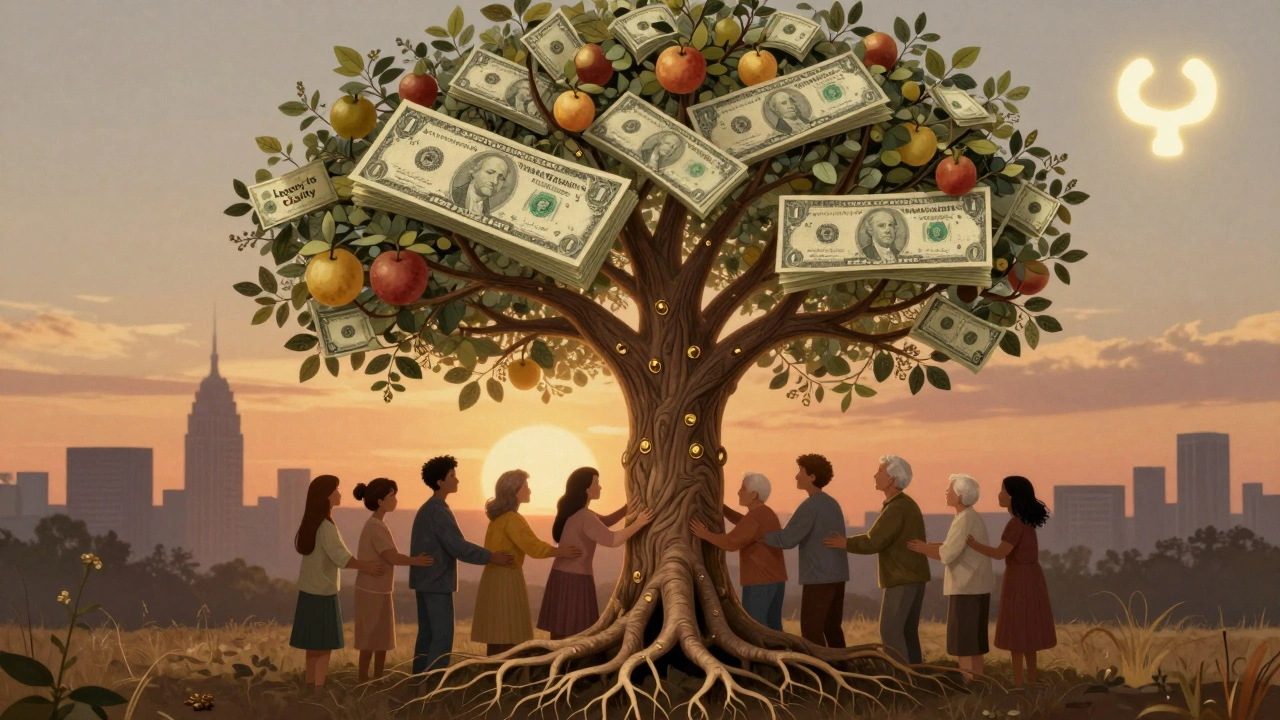
Most people who set up a CRT have a deep connection to a nonprofit. Maybe it’s the local food bank that helped their family during a hard time. Or the animal shelter that saved their dog. Or the university that gave them their degree.A CRT lets you make a lasting impact. Unlike writing a check each year, a CRT creates a legacy. The charity gets a lump sum-often hundreds of thousands or even millions-after you’re gone. That money can fund a scholarship, build a new wing, hire staff, or expand services for decades.
And you get to choose the charity. You’re not locked in. You can name multiple charities, or let a donor-advised fund hold the remainder. You can even change the charity later, if your priorities shift. The trust gives you control, even after you’re gone.
It protects your assets from probate
When you die, most of your assets go through probate-a slow, public, and expensive court process. A CRT bypasses that. Once you transfer assets into the trust, they’re no longer part of your estate. That means no delays, no court fees, no public records showing what you owned.This keeps things private and efficient. Your family doesn’t have to wait months-or years-to settle your affairs. And your charity gets its gift faster, without legal red tape.
It’s flexible. You can change it.
CRTs aren’t set in stone. You can choose between two types:- Charitable Remainder Annuity Trust (CRAT): Pays a fixed dollar amount each year. Good if you need predictable income.
- Charitable Remainder Unitrust (CRUT): Pays a fixed percentage of the trust’s value each year. If the trust grows, your income grows too. Good if you want inflation protection.
You can also name multiple beneficiaries-your spouse, kids, even a friend. And if your financial situation changes, you can often adjust the payout rate or even switch from a CRAT to a CRUT (with some limitations).

Who shouldn’t set one up?
A CRT isn’t for everyone. You need to have enough assets to make it worth the cost. Most financial advisors recommend a minimum of $250,000 to $500,000 in assets to fund a CRT. Below that, the setup fees and legal costs eat into the benefits.You also need to be okay with giving up control of the assets. Once they’re in the trust, you can’t take them back. And you’ll need to work with a lawyer, a trustee, and possibly an accountant. It’s not a DIY project.
If you’re younger, in a low tax bracket, or don’t have appreciated assets, a CRT might not make sense. A simple donation or a donor-advised fund could be better.
What happens if the charity goes out of business?
This is a common worry. What if the charity you picked closes down in 20 years? Good news: you can-and should-name a backup charity in the trust document. Most people name two or three. If the first one disappears, the remainder goes to the next. You can even name a community foundation to hold the funds and distribute them to active charities later.How to get started
1. Identify your goals: Do you want income? Tax savings? Legacy? Pick one or two. 2. Choose your charity: Make sure it’s a qualified 501(c)(3) nonprofit. Check with the IRS or your accountant. 3. Consult professionals: Work with an estate planning attorney who knows CRTs. Don’t use a generic will service. 4. Transfer assets: Stocks, real estate, or cash go into the trust. The trustee sells them tax-free. 5. Start receiving income: You’ll get payments monthly or quarterly. Keep records for your taxes. 6. Review annually: Make sure the trust is still working for you. Adjust if needed.Real example: Margaret’s story
Margaret, 72, lived in Brisbane. She owned a small apartment building she bought in 1988 for $320,000. It was now worth $1.8 million. She didn’t want to sell it-she’d lose $1.48 million to capital gains tax. She also wanted to support the Brisbane Women’s Shelter, which helped her daughter years ago. She set up a CRUT with $1.5 million in property value. She got a $680,000 tax deduction in the first year-saving her $250,000 in federal taxes. The trust sold the building tax-free. She now gets $75,000 a year for life. When she passes, the shelter gets the remaining $1.1 million. She sleeps better knowing her legacy will help women in need-and she didn’t pay a cent in capital gains.Can I fund a charitable remainder trust with my home?
Yes. You can transfer your home, rental property, or vacant land into a charitable remainder trust. The trust sells it tax-free and uses the proceeds to pay you income. You’ll need to move out if you want to avoid complications, but you can arrange a life estate if you want to stay. Talk to your attorney about the best way to structure it.
Do I have to pay taxes on the income I receive?
Yes. The income you receive from a CRT is taxable, but it’s taxed in a specific order: first ordinary income, then capital gains, then tax-free return of principal, and finally tax-free trust earnings. This means your tax bill is often lower than if you sold the asset yourself. Your accountant will help you track this.
Can I set up a CRT for my kids?
You can name your children as income beneficiaries, but only if they’re not the ones receiving the remainder. The remainder must go to a qualified charity. So your kids can get income for life, but after they pass, the money must go to a nonprofit. You can’t leave the leftover funds to your heirs.
How much does it cost to set up a charitable remainder trust?
Expect to pay between $5,000 and $15,000 in legal fees, depending on complexity. You’ll also need a trustee-either a bank or a nonprofit organization-that charges annual fees, usually 1% of the trust’s value. For a $1 million trust, that’s $10,000 a year. Make sure your assets are large enough to cover these costs and still leave a meaningful gift to charity.
Can I change the charity later?
It depends on how the trust is written. Most CRTs allow you to name a backup charity or give a trustee the power to choose a new one if your original charity closes. Some trusts let you change the charity during your lifetime, but this requires careful legal drafting. Don’t assume you can change it-plan ahead.
Is a charitable remainder trust better than a donor-advised fund?
It depends. A donor-advised fund gives you an immediate tax deduction and lets you recommend grants over time. But you don’t get income from it. A CRT gives you income for life and a tax deduction, but you can’t take the money back. If you need income and want to support a charity long-term, a CRT wins. If you just want to give and get a deduction, a donor-advised fund is simpler and cheaper.