Homeless Shelter Supplies: What You Need to Know and How to Help
When you think of homeless shelter supplies, essential items given to people without homes to meet basic needs like warmth, cleanliness, and nutrition. Also known as shelter donations, these are the quiet lifelines that keep people alive through cold nights, rainy days, and long waits for stable housing. It’s not about fancy gear—it’s about socks that don’t have holes, soap that doesn’t sting, and a warm blanket that doesn’t fall apart after one night.
Emergency essentials, the basic items people need immediately when they have nowhere else to turn include things most of us take for granted: clean underwear, toothpaste, menstrual pads, bottled water, and non-perishable snacks. These aren’t luxuries—they’re survival tools. Shelters in Varanasi and beyond run on these donations. A single box of hygiene kits can serve 50 people for a week. A pallet of canned beans can feed a shelter for days. And socks? They’re the #1 requested item. Why? Because walking miles every day on rough ground without proper footwear leads to infections, ulcers, and hospital visits.
Community outreach, the hands-on effort of connecting people in need with resources and support isn’t just about handing out supplies. It’s about knowing what’s missing. Many shelters don’t get enough baby formula, diapers, or winter coats. Others need cleaning supplies to keep spaces safe. Some need folding cots or storage bins. The best donations aren’t what you think they should give—they’re what the shelter actually asks for. That’s why listening to local groups matters more than guessing.
People who live on the streets don’t need pity. They need reliable access to the basics. And that access comes from real, consistent support—not one-time drives or social media posts. The most effective shelters in Varanasi rely on steady streams of supplies, not big one-off events. That’s why the posts below show you exactly what works: how to collect the right items, where to drop them off, how to organize a drive that actually helps, and which supplies get ignored but are desperately needed.
You don’t need to be rich to make a difference. You just need to know what counts. A new pair of socks. A bar of soap. A bag of rice. These aren’t just things—they’re dignity. And the people who use these shelters know it. The posts you’ll find here aren’t theory. They’re real stories from people who’ve been there, from volunteers who’ve sorted through bins, and from shelters that learned the hard way what actually helps.
What you’ll find below isn’t a list of wishlists. It’s a guide to what matters. From how to get $300 fast if you’re homeless, to the cheapest bulk foods that feed large groups, to the top programs that actually work—this collection is built on what’s real, what’s urgent, and what works. No fluff. No slogans. Just the things that keep people alive and give them a chance to rebuild.
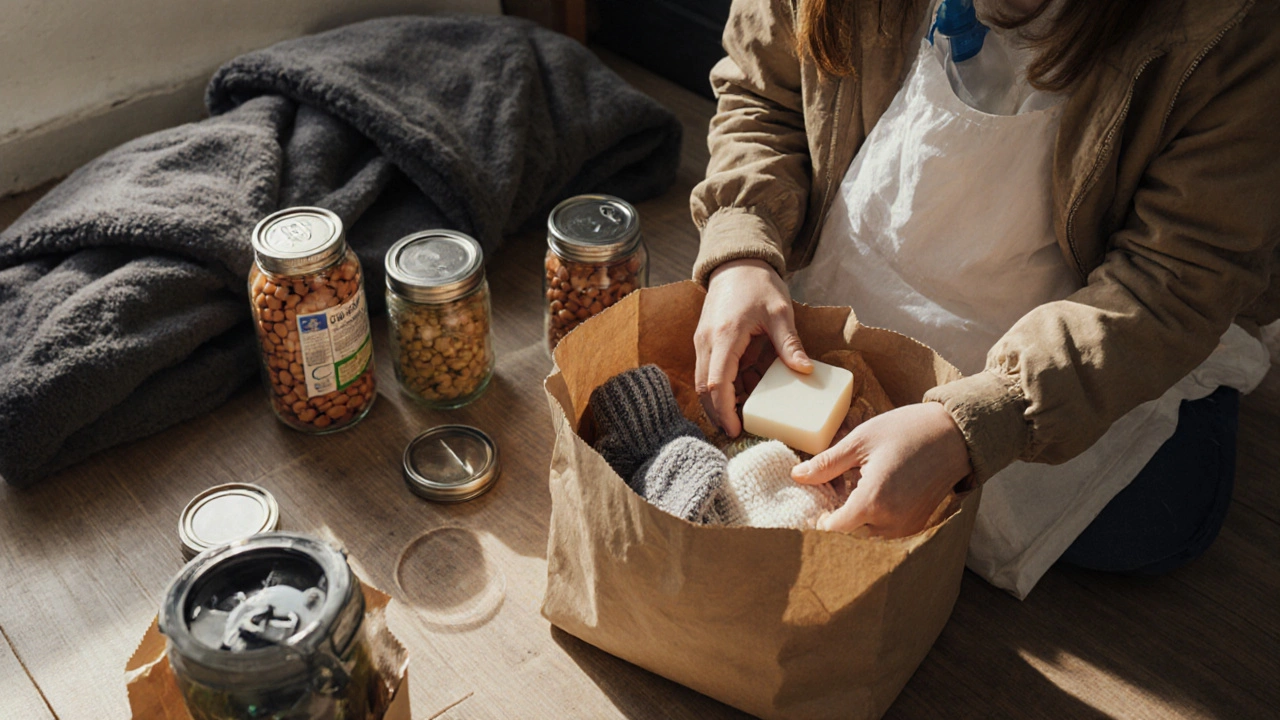
What Not to Put in Homeless Care Packages: Common Mistakes and Better Alternatives
- Nov, 8 2025
- 0
Learn what not to include in homeless care packages to avoid waste and ensure your donations truly help. Discover the essentials that make a real difference for people experiencing homelessness.
Categories
- Volunteering (40)
- Environment (39)
- Youth Programs (34)
- Charity Events (33)
- Community Outreach (32)
- Homelessness (31)
- Charitable Organizations (28)
- Community Support (18)
- Finance (15)
- Education (10)
Archives
- March 2026 (8)
- February 2026 (6)
- January 2026 (7)
- December 2025 (10)
- November 2025 (8)
- October 2025 (23)
- September 2025 (4)
- August 2025 (8)
- July 2025 (31)
- June 2025 (29)
- May 2025 (30)
- April 2025 (31)
- community outreach
- charity events
- after-school clubs
- community service
- charitable trust
- philanthropy
- volunteering
- community engagement
- homeless shelters
- environmental groups
- volunteer opportunities
- charitable giving
- estate planning
- mental health
- youth organizations
- fundraising
- charity
- student engagement
- community help
- donations